Wagamama Allergen Menu UK: How To Check Every Dish (2026)
Wagamama doesn’t publish a single printed “allergy menu” — instead, every dish’s ingredients are checked through an interactive allergen tablet, available both in restaurant and online, that lists all 14 legally mandated allergens for that specific dish. This guide explains exactly how that system works, what it does and doesn’t cover, and how to use it before you order.
How Wagamama Shows Allergen Information
Wagamama’s allergen information is provided through an interactive allergen tablet, which you can use in restaurant or check online before you visit. You select a dish and it shows which of the 14 legally mandated allergens that dish contains. A separate version exists for Northern Ireland restaurants, since NI operates under its own allergen labelling rules.
Because most dishes are prepared in shared kitchens, some carry a “may contain” warning. Wagamama’s own wording on this is specific: “whilst the allergen has not been intentionally added to the recipe or dish, there may be a risk of traces of the allergen from the manufacturer, handling, storage or cooking processes.” In other words, the tablet tells you what’s deliberately in a dish — it can’t fully rule out trace cross-contact in a kitchen that also handles nuts, gluten, shellfish and the rest of the 14 allergens across other dishes.
Wagamama’s own guidance is to tell your server about a food allergy or intolerance before you order, on every visit — not just the first time you go, and not assuming the kitchen remembers a previous visit. Staff can modify some recipes to remove or replace certain ingredients, but this isn’t guaranteed for every dish.
The 14 Legally Mandated Allergens
UK food law requires every restaurant to declare 14 specific allergens when asked, and Wagamama’s allergen tablet is built around exactly this list:
- Celery
- Cereals containing gluten (wheat, barley, rye, oats)
- Crustaceans
- Eggs
- Fish
- Lupin
- Milk
- Molluscs
- Mustard
- Tree nuts
- Peanuts
- Sesame
- Soybeans (soya)
- Sulphur dioxide and sulphites
This is the full legal list, not a shortened version — earlier guidance sometimes circulated with only 8 of the 14, which understates what the tablet actually checks for.
A Worked Example: Chicken Katsu Curry
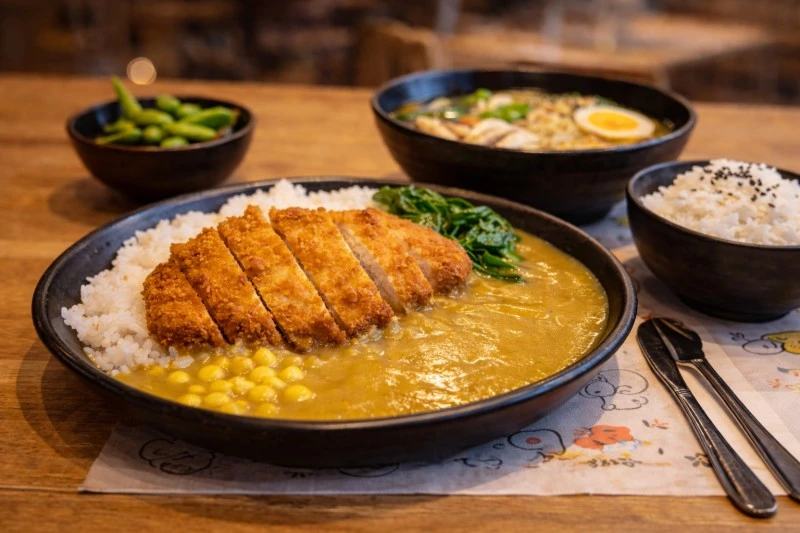
To show what the tablet actually returns, here’s a real, verified example. Wagamama’s Chicken Katsu Curry (988 kcal) lists cereals containing gluten (wheat), eggs, mustard and soya as its declared allergens. That single dish already touches four of the 14 — which is normal for a breaded, sauced main, and exactly why checking dish-by-dish matters more than assuming a whole category is “safe” or “unsafe.”
The same logic applies across the ramen range: standard ramen bowls use wheat noodles (gluten), while the Grilled Chicken Ramen in Wagamama’s gluten-free category is made with rice noodles instead and lists soya as its main declared allergen — a genuinely different dish, not a substitution within the same recipe. See our full gluten-free menu guide for the complete list of what’s actually in that category.
Gluten-Free, Vegan and Halal at Wagamama
Allergen information, gluten-free dishes, vegan dishes and halal status are four separate things at Wagamama, and it’s worth not conflating them:
- Gluten-free — Wagamama runs a dedicated Gluten Free category on its menu, not a fully gluten-free kitchen. See our gluten-free menu guide for named dishes and calories.
- Vegan — a separate dietary filter from “gluten-free,” covering dishes with no animal products. See our vegan menu guide.
- Halal — Wagamama is not halal-certified in the UK. See our full halal guide for what that means in practice and what Muslim diners typically order instead.
A dish can be gluten-free without being vegan, vegan without being nut-free, or halal-relevant without being allergen-free — always check the specific dish on the tablet rather than assuming one label covers the others.
Ordering With Allergies: Safety Tips
Check the Tablet Before You Go
The allergen tablet is available online as well as in restaurant, so you can check a dish before you arrive rather than relying on memory or a printed list that may be out of date.
Tell Your Server Every Visit
Wagamama’s own guidance is to flag a food allergy or intolerance to your server before ordering, every time — not just on your first visit to a branch.
Be More Cautious With Delivery
Ordering in restaurant lets staff confirm ingredients and preparation directly. With delivery or takeaway, that direct conversation isn’t possible, so it’s worth checking the tablet carefully and, for a severe allergy, considering whether dine-in is the safer option.
Frequently Asked Questions
Does Wagamama have an allergy menu?
Not as a single printed document — instead, Wagamama uses an interactive allergen tablet, available in restaurant and online, that shows the 14 legally mandated allergens for each dish individually.
Is Wagamama gluten-free?
No — Wagamama does not run a fully gluten-free kitchen, but it does have a dedicated Gluten Free menu category with named dishes such as the Grilled Chicken Ramen (made with rice noodles). See our gluten-free menu guide for the full list.
Can Wagamama cater for food allergies?
Staff can advise on suitable dishes and modify some recipes once you’ve told them about an allergy, but because kitchens are shared, Wagamama cannot guarantee any dish is completely free of a given allergen — check the tablet and confirm with your server every visit.
Does the allergen tablet cover Northern Ireland restaurants?
Yes, but Northern Ireland has its own separate version of the allergen resource, reflecting NI’s own allergen labelling rules — use the NI-specific tool rather than the standard GB one if you’re visiting a Northern Ireland branch.
Are there vegan options at Wagamama?
Yes — vegan is tracked as its own dietary filter, separate from gluten-free. See our vegan menu guide for the current named dishes.
Last updated: September 2026. This is an independent guide to Wagamama’s publicly stated allergen policy and is not affiliated with Wagamama — always confirm allergen information directly with the restaurant or its official allergen tablet before ordering, especially for a severe or life-threatening allergy.
Wagamama Allergen Menu UK: How To Check Every Dish (2026)
Wagamama doesn’t publish a single printed “allergy menu” — instead, every dish’s ingredients are checked through an interactive allergen tablet, available both in restaurant and online, that lists all 14 legally mandated allergens for that specific dish. This guide explains exactly how that system works, what it does and doesn’t cover, and how to use it before you order.
How Wagamama Shows Allergen Information
Wagamama’s allergen information is provided through an interactive allergen tablet, which you can use in restaurant or check online before you visit. You select a dish and it shows which of the 14 legally mandated allergens that dish contains. A separate version exists for Northern Ireland restaurants, since NI operates under its own allergen labelling rules.
Because most dishes are prepared in shared kitchens, some carry a “may contain” warning. Wagamama’s own wording on this is specific: “whilst the allergen has not been intentionally added to the recipe or dish, there may be a risk of traces of the allergen from the manufacturer, handling, storage or cooking processes.” In other words, the tablet tells you what’s deliberately in a dish — it can’t fully rule out trace cross-contact in a kitchen that also handles nuts, gluten, shellfish and the rest of the 14 allergens across other dishes.
Wagamama’s own guidance is to tell your server about a food allergy or intolerance before you order, on every visit — not just the first time you go, and not assuming the kitchen remembers a previous visit. Staff can modify some recipes to remove or replace certain ingredients, but this isn’t guaranteed for every dish.
The 14 Legally Mandated Allergens
UK food law requires every restaurant to declare 14 specific allergens when asked, and Wagamama’s allergen tablet is built around exactly this list:
- Celery
- Cereals containing gluten (wheat, barley, rye, oats)
- Crustaceans
- Eggs
- Fish
- Lupin
- Milk
- Molluscs
- Mustard
- Tree nuts
- Peanuts
- Sesame
- Soybeans (soya)
- Sulphur dioxide and sulphites
This is the full legal list, not a shortened version — earlier guidance sometimes circulated with only 8 of the 14, which understates what the tablet actually checks for.
A Worked Example: Chicken Katsu Curry
To show what the tablet actually returns, here’s a real, verified example. Wagamama’s Chicken Katsu Curry (988 kcal) lists cereals containing gluten (wheat), eggs, mustard and soya as its declared allergens. That single dish already touches four of the 14 — which is normal for a breaded, sauced main, and exactly why checking dish-by-dish matters more than assuming a whole category is “safe” or “unsafe.”
The same logic applies across the ramen range: standard ramen bowls use wheat noodles (gluten), while the Grilled Chicken Ramen in Wagamama’s gluten-free category is made with rice noodles instead and lists soya as its main declared allergen — a genuinely different dish, not a substitution within the same recipe. See our full gluten-free menu guide for the complete list of what’s actually in that category.
Gluten-Free, Vegan and Halal at Wagamama
Allergen information, gluten-free dishes, vegan dishes and halal status are four separate things at Wagamama, and it’s worth not conflating them:
- Gluten-free — Wagamama runs a dedicated Gluten Free category on its menu, not a fully gluten-free kitchen. See our gluten-free menu guide for named dishes and calories.
- Vegan — a separate dietary filter from “gluten-free,” covering dishes with no animal products. See our vegan menu guide.
- Halal — Wagamama is not halal-certified in the UK. See our full halal guide for what that means in practice and what Muslim diners typically order instead.
A dish can be gluten-free without being vegan, vegan without being nut-free, or halal-relevant without being allergen-free — always check the specific dish on the tablet rather than assuming one label covers the others.
Ordering With Allergies: Safety Tips
Check the Tablet Before You Go
The allergen tablet is available online as well as in restaurant, so you can check a dish before you arrive rather than relying on memory or a printed list that may be out of date.
Tell Your Server Every Visit
Wagamama’s own guidance is to flag a food allergy or intolerance to your server before ordering, every time — not just on your first visit to a branch.
Be More Cautious With Delivery
Ordering in restaurant lets staff confirm ingredients and preparation directly. With delivery or takeaway, that direct conversation isn’t possible, so it’s worth checking the tablet carefully and, for a severe allergy, considering whether dine-in is the safer option.
Frequently Asked Questions
Does Wagamama have an allergy menu?
Not as a single printed document — instead, Wagamama uses an interactive allergen tablet, available in restaurant and online, that shows the 14 legally mandated allergens for each dish individually.
Is Wagamama gluten-free?
No — Wagamama does not run a fully gluten-free kitchen, but it does have a dedicated Gluten Free menu category with named dishes such as the Grilled Chicken Ramen (made with rice noodles). See our gluten-free menu guide for the full list.
Can Wagamama cater for food allergies?
Staff can advise on suitable dishes and modify some recipes once you’ve told them about an allergy, but because kitchens are shared, Wagamama cannot guarantee any dish is completely free of a given allergen — check the tablet and confirm with your server every visit.
Does the allergen tablet cover Northern Ireland restaurants?
Yes, but Northern Ireland has its own separate version of the allergen resource, reflecting NI’s own allergen labelling rules — use the NI-specific tool rather than the standard GB one if you’re visiting a Northern Ireland branch.
Are there vegan options at Wagamama?
Yes — vegan is tracked as its own dietary filter, separate from gluten-free. See our vegan menu guide for the current named dishes.
Last updated: September 2026. This is an independent guide to Wagamama’s publicly stated allergen policy and is not affiliated with Wagamama — always confirm allergen information directly with the restaurant or its official allergen tablet before ordering, especially for a severe or life-threatening allergy.
Similar Posts
wagamama canary wharf
wagamama canary wharf – menu, prices, halal status & complete…
Wagamama Gluten Free Menu
Wagamama Gluten Free Menu UK (2026 Guide to Gluten-Free Dishes)…
Wagamama Vegan Menu
Wagamama Vegan Menu UK (2026 Guide to Plant-Based Dishes &…
Wagamama Calories
UK Nutrition Guide · Updated September 2026 Wagamama Calories &…